History
The town of Le Marin is located in southern Martinique, bordered by Rivière-Pilote to the west, Le Vauclin to the north, and Sainte-Anne to the south.
It is one of the oldest inhabited areas on the island, dating back to colonization. In 1660, the first settlers arrived, along with a priest named Hebert, and established a village.
By 1664, during the first census of the island ordered by Colbert, the town was known as “Cul-de-sac de Saint-Étienne du Marin” and had 199 inhabitants.
In April 1673, the French and English clashed over control of the island of Martinique. The English burned the chapel and the village, devastating plantations and livestock.
Around 1700, the village was rebuilt, and the port began to attract merchant ships. By 1720, the town had grown enough to warrant the appointment of a subdelegate (an assistant to the intendant).
In 1728, the district of Sainte-Anne was separated from Le Marin.
By 1731, Le Marin had its own royal lieutenancy.
In 1764, the port became the administrative center of one of the island’s four departments.
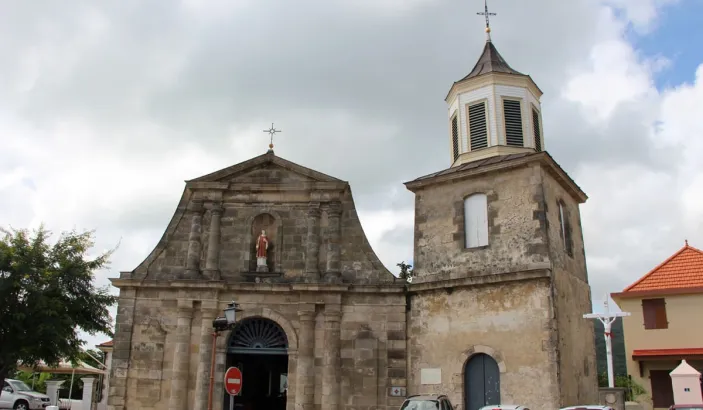
In 1766, construction of a new church began under the direction of Count d’Ennery. That same year, a blue flag with a white cross and four spears appeared—flown by merchant ships arriving in the Bay of Le Marin.
By 1783, the village had grown significantly, with 90 houses. Commerce was its main activity.
In 1808, during yet another naval battle between the French and English fleets, the French ship Griffon, commanded by Lieutenant Gautier, sought refuge in the bay and was blockaded by English forces. A fierce battle ensued. The English were repelled and landed at Pointe Dunkerque, where a land battle began. The commander of Sainte-Anne’s brigade, Girardin de Montgérald, was reportedly killed. The English retreated when the Le Marin militia, led by Mondésir Gonnier, arrived.
In 1839, Le Marin was officially established as a commune. A municipal council was elected for a six-year term. The first mayor, Jean-Baptiste Pelet de Lautrec, replaced the parish commander and served until the abolition of slavery in 1848, when he was succeeded by Valcourt Dusquesnay.
Around 1850, the civil hospital of Le Marin was built, serving neighboring communes like Sainte-Anne, Le Vauclin, Rivière-Pilote, and Sainte-Luce.
Around 1869, Charles Harouard and Joseph Braud built a sugar factory, replacing 12 small sugar mills scattered throughout southeastern Martinique.
In 1883, the first secular school—championed by Osman Duquesnay—opened its doors. Four years later, a charming wooden town hall was built, later rebuilt in 1969.
At the start of the 20th century, the commune had 4,912 residents, most living in the village center, which served as a hub for surrounding rural communities. Steamships connected Le Marin to Saint-Pierre.
In 1969, the sugar factory, which employed 120 workers and foremen, closed due to economic difficulties. This marked a turning point in the town’s economy, prompting a shift in direction.
That same year, the town hall was rebuilt.
In 1974, Le Marin became a sub-prefecture, and a fishing port was constructed.
In 1985, the state transferred the marina concession to the commune.
By 2012, with its focus now on tourism, Le Marin received the “Trophée de l’escale” for excellence in welcoming visitors.
Economy
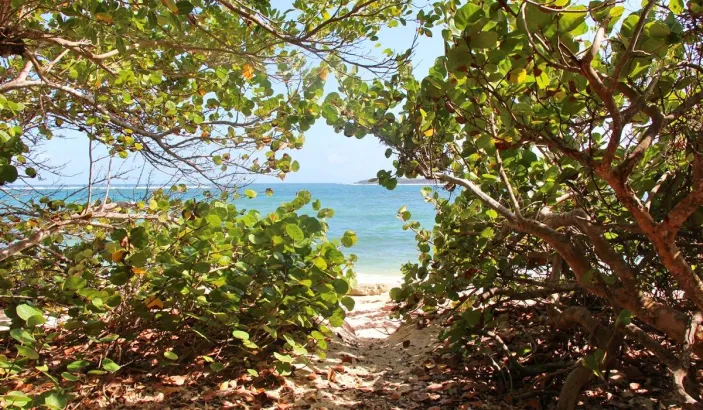
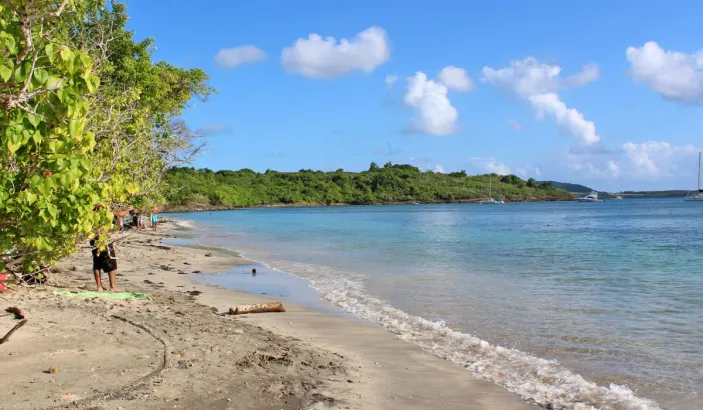
Following the closure of the sugar factory, Le Marin fully transitioned to a service-based economy, centered on tourism and commerce. With three beaches, a bustling marina, and many attractions, the town draws most of its revenue from tourism and local businesses. Residents from nearby southern communes often shop in Le Marin for groceries and essentials, avoiding the traffic congestion along the south-north axis.
Neighborhoods
Le Marin’s main neighborhoods are Artisanal, Bernard, Berry, Boucan, Cap Beauchene, Cap Bois Neuf, Cap Champfleury, Cap Macré, Cap Marin, Cap Morne Flambeau, Cedalise, Fillette, Fond Gens Libres, Fons Debase, Fouquette, Jean Baptiste, La Agnes, La Huvet, La Mamisse, La Source, La Vierge, Leptune, Mare Capron, Marguerite, Massel, Mondésir, Montgérald, Morne Courbaril, Morne Gommier, Morne Rouge, Pérou, Puy Ferrat, Robin, Saint Onge, Suffrin, Tocnay, and Vierge Fouquette.




 Le MarinMayor:José MirandeZip code:97290Number of inhabitants:8,598 inhab. (2022)Surface area:31.54 km² (11.97 m²)