History
Papaya, whose scientific name is Carica papaya, originates from southern Mexico. It was cultivated by the Indigenous peoples who lived in Mexico before colonization. It was during the colonial period that the fruit was introduced to the island. Today, it is found throughout the intertropical zone.
Varieties
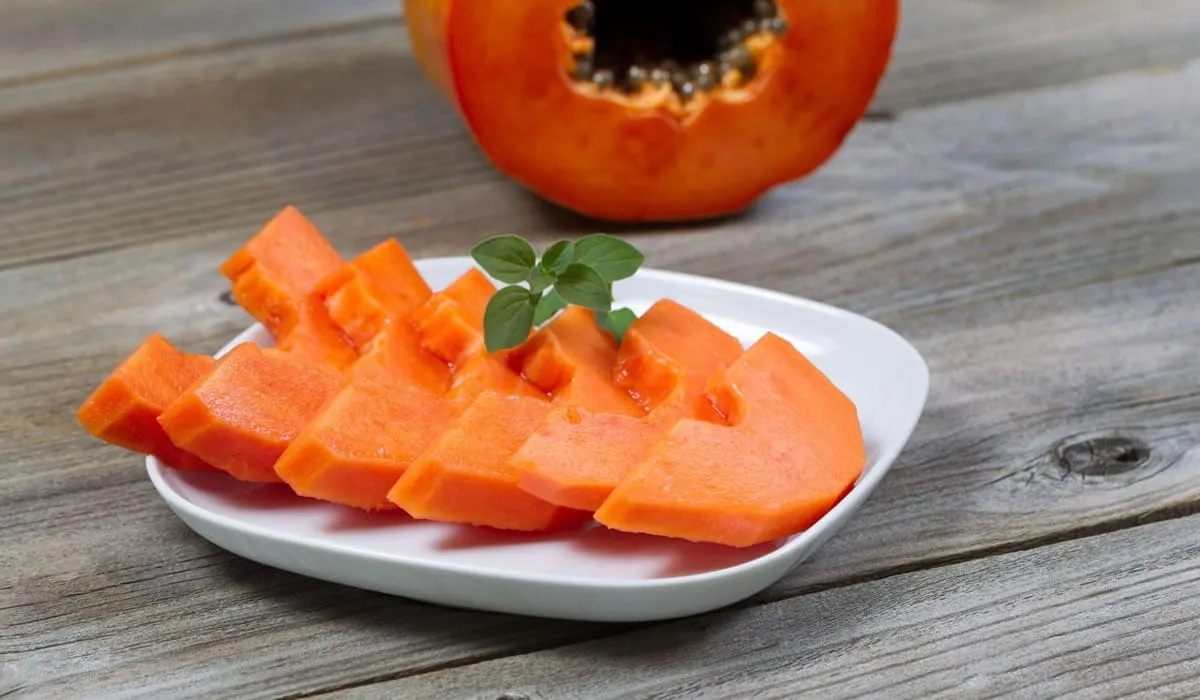
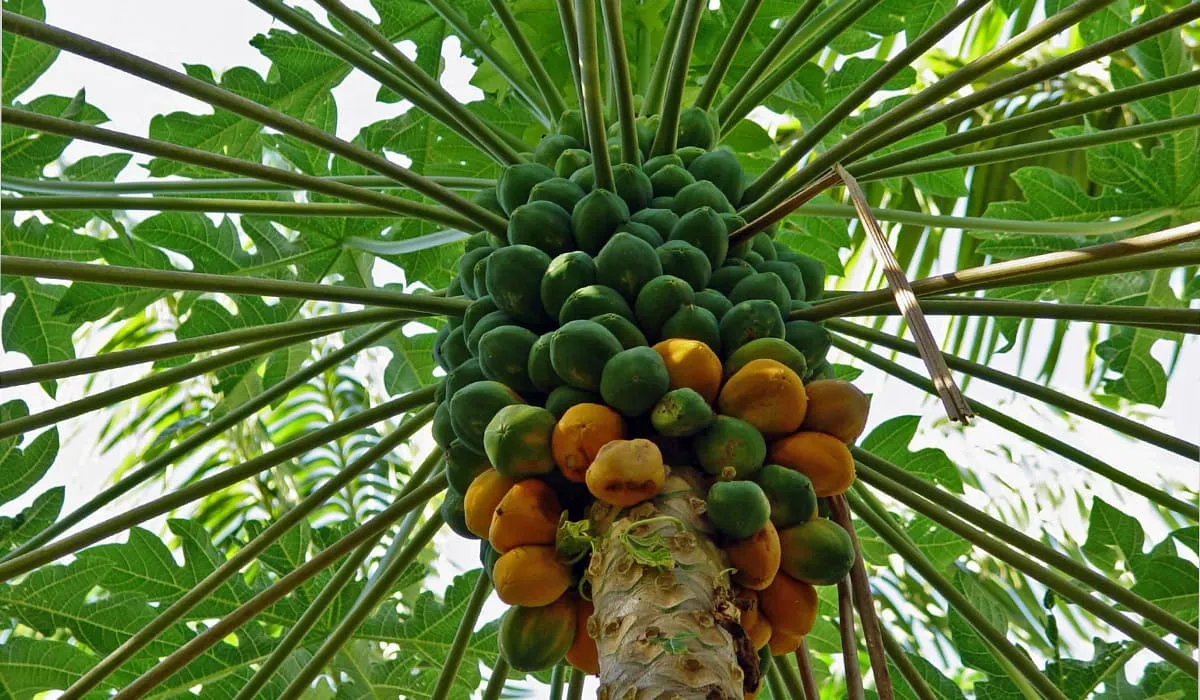
There are many varieties of papaya, distinguished by the color of their flesh (ranging from pale yellow to deep red). There are male and female papaya trees, but only the female tree bears fruit. The papaya tree has a green trunk and closely resembles a palm tree. It has large, palmate leaves, and its fruits grow clustered along the trunk. It requires heavy rainfall to produce fruit.
The papaya tree is a shrub that grows between 3 and 7 meters tall. Its lifespan is short, three to five years, but it produces fruit continuously from the first year after planting. When the main trunk is pruned or broken, secondary branches often form; they may also appear naturally without any damage to the main trunk. The hollow trunk, about 20 cm in diameter, is covered with greenish or grayish bark marked by leaf scars.
Medicinal properties
Papaya contains a specific enzyme, papain, found in the latex of unripe fruits. Papain aids digestion. The seeds are used as a vermifuge. It is a low‑calorie fruit, and regular consumption does not lead to weight gain. Papaya is rich in vitamin C and carotene, two protective antioxidants.
Uses
Papaya is eaten as a fruit when the berry is fully ripe, but it can also be used as a vegetable, like a squash. In the Caribbean, green papaya is prepared in gratins or stews. Ripe papaya can be used to make jam.
It is also sometimes found in tropical fruit salads. Its flowers, roots, and dried or ground seeds are used to prepare herbal teas.