
Paille Caraïbe

“La Paille Caraïbe” is a basketry workshop located in the Morne‑des‑Esses district of Sainte‑Marie. It has preserved the craft practices of pre‑Columbian tradition, passed down orally — a true heritage from the Kalinago (Carib) people. This Creole workshop continues to uphold Amerindian know‑how, its gestures, and its techniques.

Created in 1967, it originally brought together around fifty artisans. Today, only two or three remain, all over 70 years old. The knowledge has been passed down from father to son. The various objects are crafted using two main tropical plants: cachibou and aroman, from which the precious weaving stems are extracted. Visitors can watch demonstrations of dyeing and weaving techniques.

The site also includes an exhibition and sales area where you can see and purchase the items woven on‑site: bags, bracelets, necklaces, rings, “attrapes‑doudou,” mats, pottery, lamps and floor lamps, suitcases, sewing boxes, Caribbean baskets, bottles, vases, hats of all kinds, and more.

A perfect opportunity to take home a souvenir, with prices starting at €3.

To get there, head toward the Morne‑des‑Esses district via the D25. The workshop is located about 6 km from the town center of Sainte‑Marie.
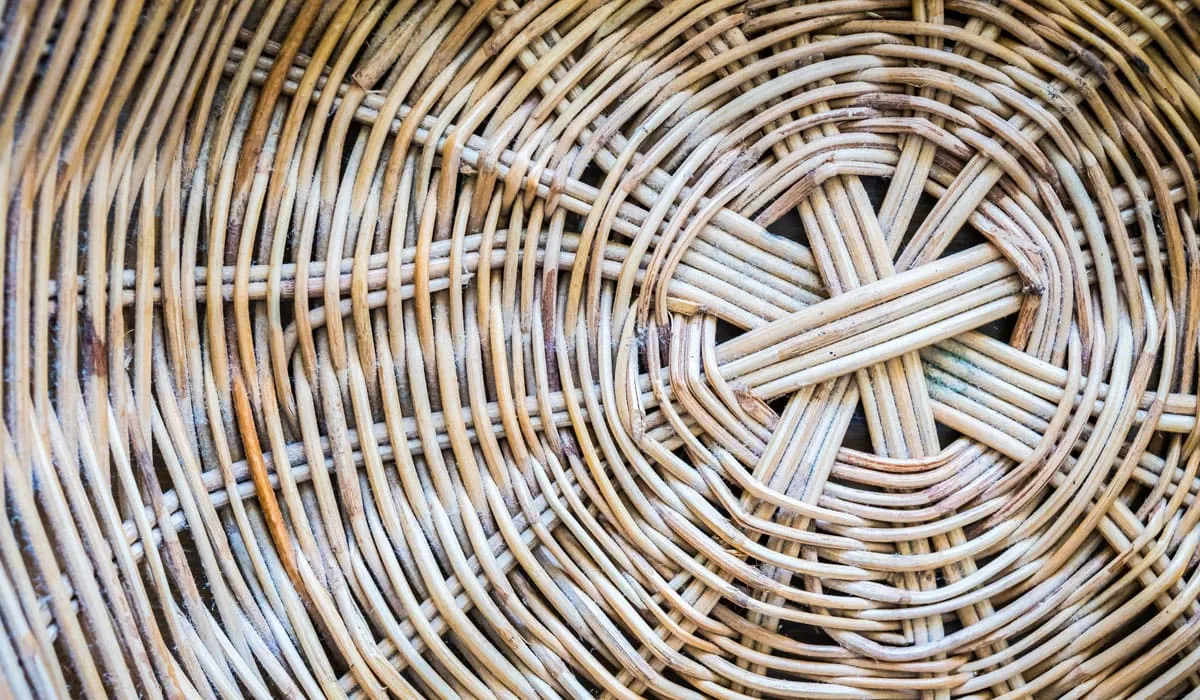
Photo gallery
Wicker basket
Wicker basket

The markets of Fort-de-France

There are several markets in Fort-de-France. Among them, the three most notable are the Grand Marché and the Marché des Fruits et Légumes of Boulevard Général de Gaulle and the one on Avenue Paulette Nardal.

Inaugurated with great pomp and circumstance with three days of festivities on September 12, 1885, the Grand Marché couvert de Fort-de-France is one of the places not to be missed if you want to taste and leave with fresh local fruits and vegetables. In addition to the gustatory aspect, you will also be able to get closer to the local population who come to buy from the fruit and vegetable sellers at dawn.

It is also possible to buy souvenirs (dolls in traditional dress, local handicrafts, alcohol), which you can bring back from your trip to the island.

Built by Pierre-Henry Picq (the same who had built the Schoelcher Library and St. Louis Cathedral), the largest market was destroyed five years after its inauguration, in 1890, by a fire, and one year later, in 1891, by a hurricane. It was rebuilt in 1901.

Today, the Grand Marché de Fort-de-France is not only a place to buy fruits and vegetables, is also a space where you can find restaurants and delicious Creole menus.

A must see!

Addresses of the three main markets of Fort-de-France:

The Grand Marché in the city center
Rue Blénac
97200 Fort-de-France
Geographical coordinates: 14.605291570004736, -61.071923021992895

Fruit and vegetable market on Boulevard Général de Gaulle
Crossroads of Boulevard Général de Gaulle and Rue du Pavé
97200 Fort-de-France
Geographical coordinates: 14.607634409676818, -61.06781381476439

Fruit and Vegetable Market of Paulette Nardal Avenue
Avenue Paulette Nardal
97200 Fort-de-France
Geographical coordinates: 14.609227070120243, -61.073422094870516

Photo gallery
Marché de Fort de France
Piments en vente au marché de Fort de France
Liqueurs en vente au marché de Fort de France
Marché de Fort de France
Fleurs en vente au marché de Fort de France
Marché de Fort de France
Bananes en vente au marché de Fort de France
Ignames en vente au marché de Fort de France
Legumes à soupe en vente au marché de Fort de France
Liqueur en vente au marché de Fort de France