
History
The turban squash, belonging to the species Cucurbita maxima, is a variety of pumpkin cultivated in the Antilles. It originates from the Caribbean and is therefore considered endemic to the region. It is also called the “sweetness of the Antilles.”
The word comes from jirumum, borrowed from the Tupi language, which referred to a type of squash once grown in the Caribbean islands by the Kalinago (Carib) people. It is attested as early as 1614 under the form giromon.
Varieties
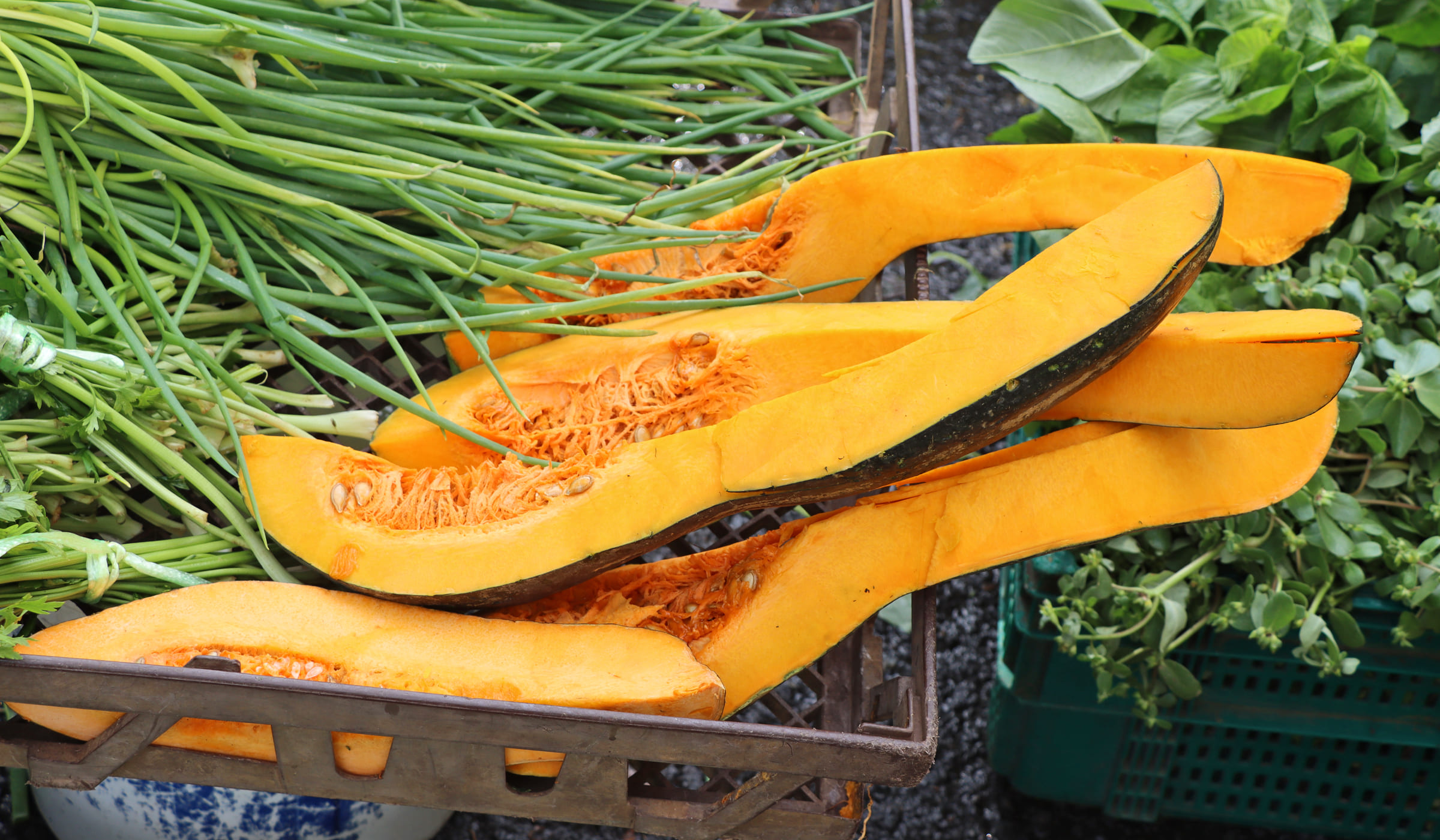
There are many varieties of pumpkins, but two varieties of turban squash: the Turban type (also called Turkish Turban) and the Galeux d’Eysines type. Turban squash has a green‑and‑white skin that is rather tough though not thick, and an edible flesh ranging from yellow‑orange to deep orange. Often compared to pumpkin, it is less sweet and has a more granular texture.
A turban squash can weigh more than 5 kg, but on average it measures 15 to 20 cm in diameter at maturity and weighs around 1.5 kg. It is possible, though rare, to find turban squashes weighing more than 20 kg.
Medicinal properties
Turban squash is composed mostly of water and is therefore neither caloric nor energy‑dense. Rich in potassium, it supports blood pressure regulation, healthy intestinal function, and the reduction of certain cancers. Thanks to its vitamin A content, it also has antioxidant properties.
Uses
Once cooked, the flesh becomes creamy. Turban squash is eaten in cooked salads. It also makes a velouté or soup that can be used in other meat preparations or in turban‑squash rice. In Haiti, turban‑squash soup is the traditional meal on January 1st, the island’s national holiday celebrating its independence.
Turban squash flowers are edible and are sometimes used to make fritters in Martinique. Its hollowed‑out shell can be used as a container.
The peels of turban squash can be reused to make organic compost for plants.


