History
The mango, whose scientific name is Mangifera indica, is believed to originate from India. It remained unknown for a very long time until Portuguese navigators introduced it to Latin America and then to the Caribbean around the 16th century. It is therefore likely that mangoes arrived in Martinique at the very beginning of the colonial period.
Varieties
There are nearly 1,000 varieties of mangoes. The mangoes found in metropolitan French and European markets are often imported from Brazil or tropical Africa. Mangoes from Martinique are not exported to France, so you must travel to the island to taste this delicious fruit, which is very common there. In Martinique, people call the smaller mangoes “mangots” and the larger ones “mangoes.”
Many varieties are found in Martinique.
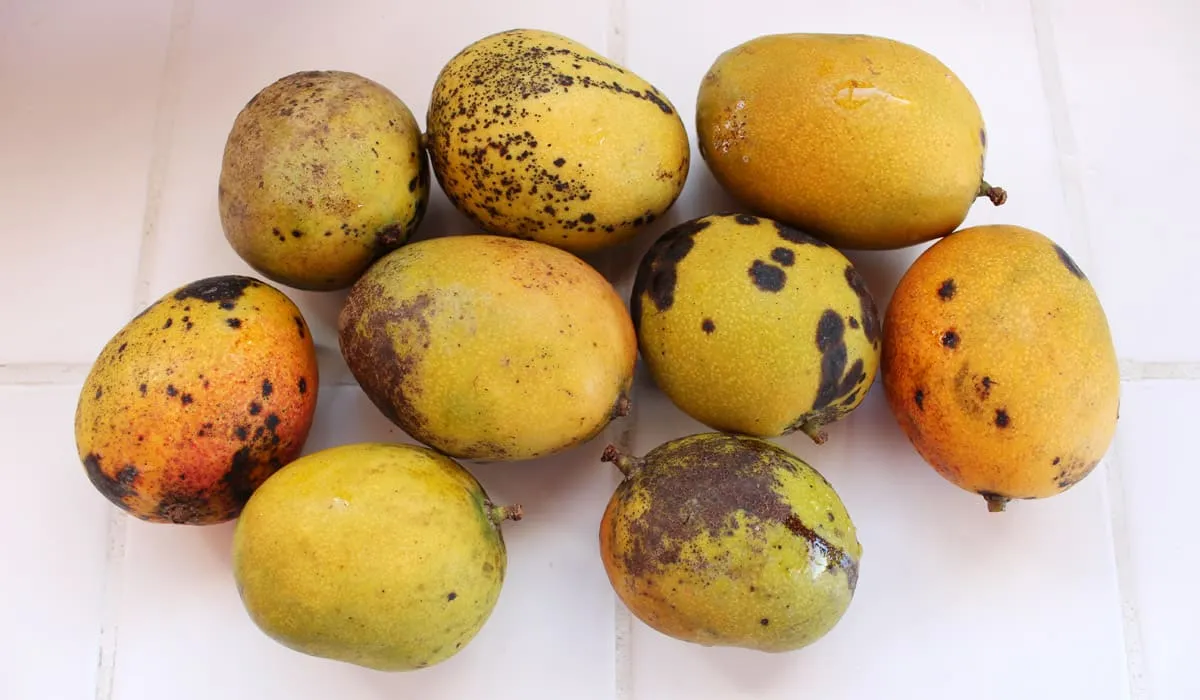
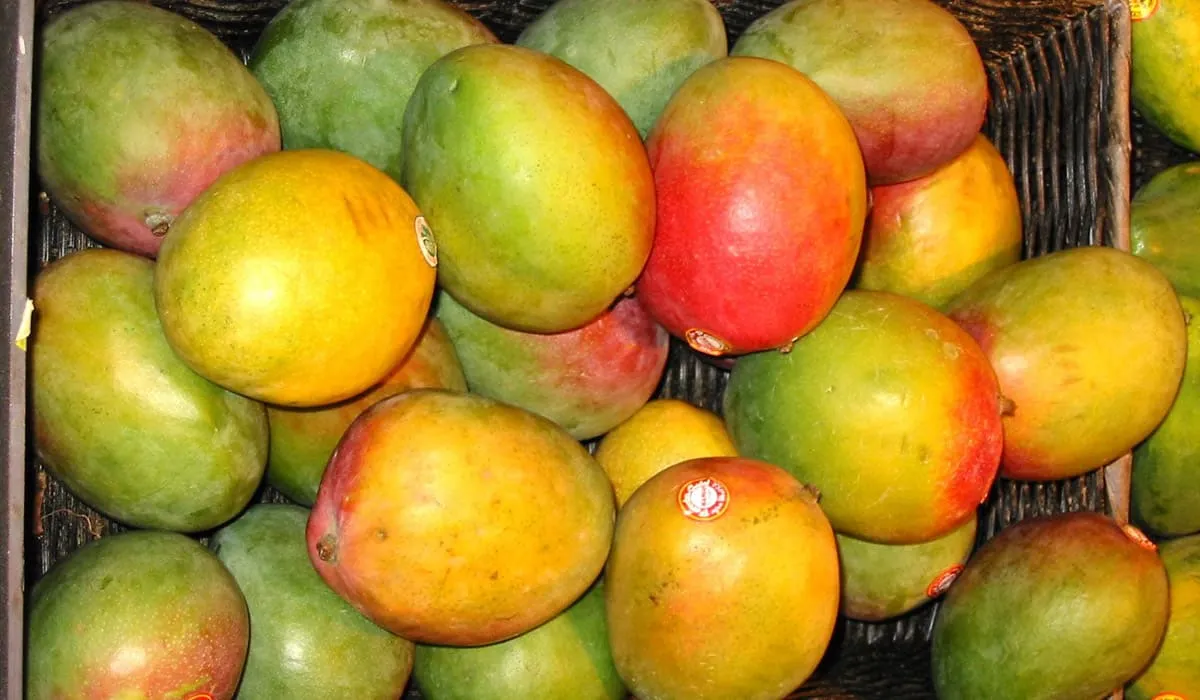
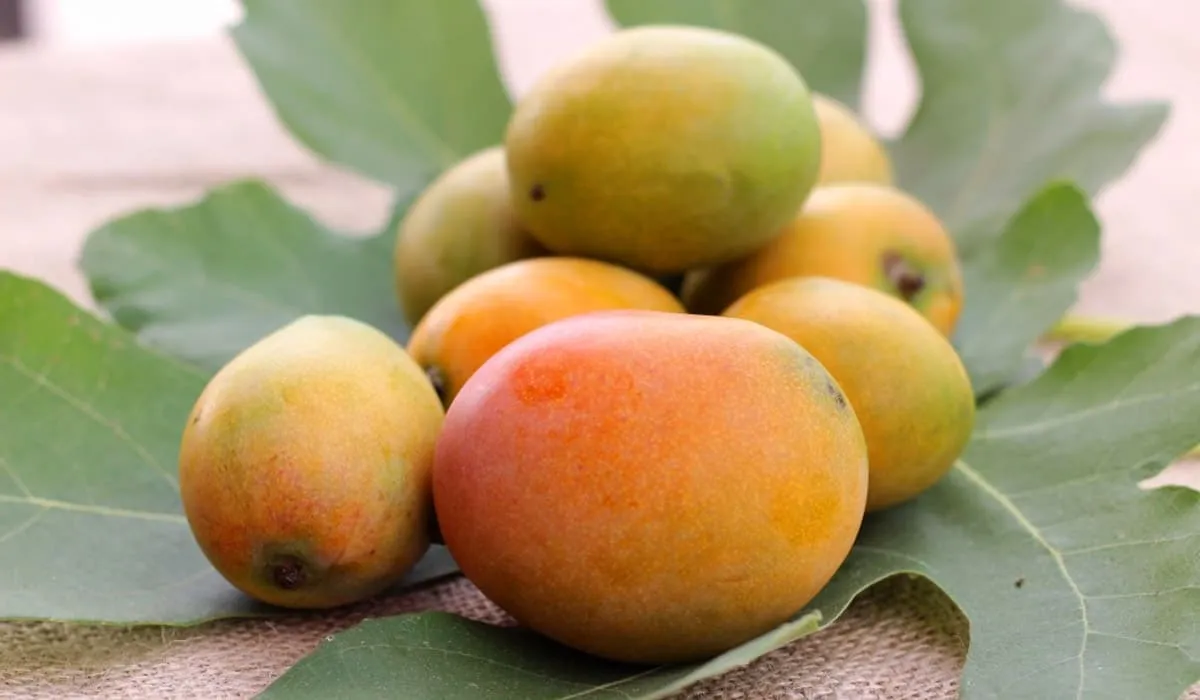
Depending on the variety, the color, taste, and shape of the mango can vary. In Martinique, the following varieties are commonly found: Julie, Divine, Reine Amélie, Mangue d’Or, Bassignac, Zéfirine, Mangot vert, Mangot Moussache, and others. The Julie mango and the Bassignac mango are said to be the most widespread on the island. It is not uncommon for residents to have several mango trees of different varieties in their gardens. Mangoes are generally harvested from May to August.
The mango tree is a robust tree with dense foliage. It can reach up to 30 meters in height. Its leaves are dark green and thick. Its flowers are tiny and hermaphroditic. In the Antilles, they are often—wrongly—accused of causing conjunctivitis when dispersed in the air.
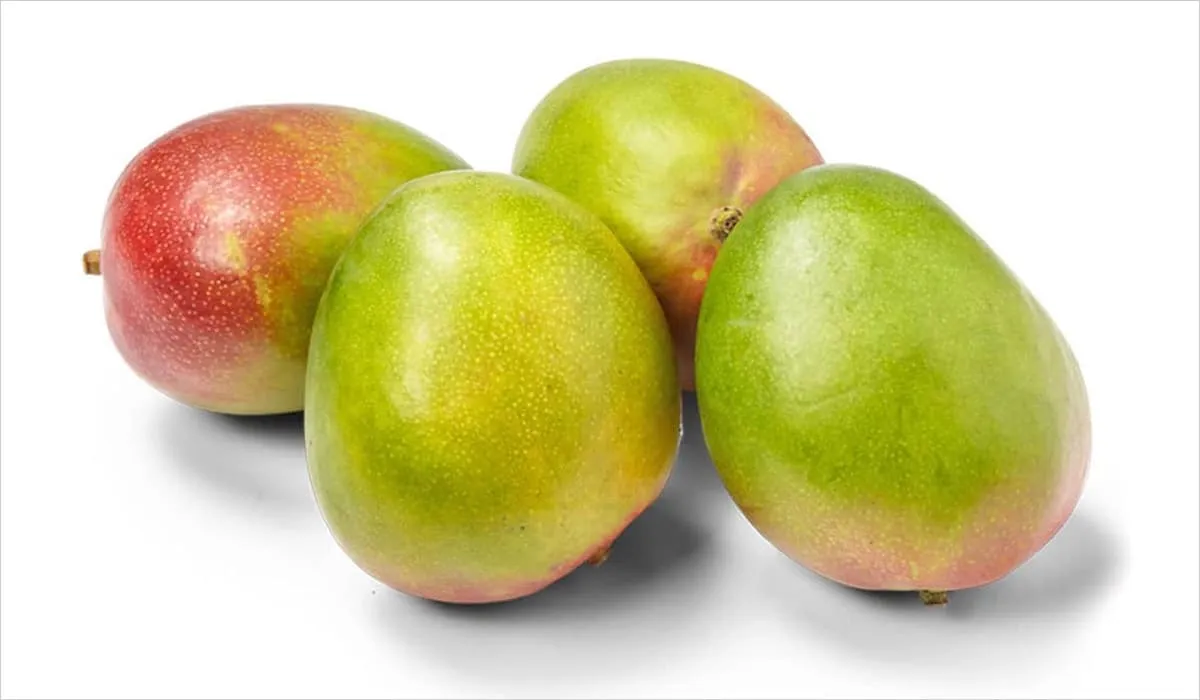
The fruits weigh between 50 grams and 2 kilograms, depending on the variety. The skin of the young fruit is green but turns a mix of green, yellow, orange, and even red when ripe. The ripe fruit has yellow or orange flesh that is soft, juicy, and very fragrant. It contains a flat, fibrous pit.
Medicinal properties
Mango has many therapeutic benefits. It contains numerous enzymes that help fight cancer cells. Its high vitamin A content supports visual acuity. It is laxative, and applying its pulp to the skin is said to be effective against acne. Mango leaves prepared as an infusion help reduce blood sugar levels. The presence of vitamin E improves the functioning of sexual hormones and increases libido. It also helps prevent anemia.
However, excessive consumption may cause diarrhea in some individuals.
Uses
In Martinique, mango is usually enjoyed fresh. It is also found in juices, ice creams, jams, and various alcoholic beverages. Mango was even celebrated in a popular song by local singer Eugène Mona titled “Mango-vè a.”