History
Originally from South America and most likely northern Brazil, the pineapple—scientific name Ananas comosus—was first called nana (“perfume”), then nana nana (“perfume of perfumes”), before being named anana by the Carib Indians around the time Christopher Columbus discovered the fruit in 1493 during his landing in Guadeloupe.
At that time, a slice of pineapple was offered as a welcome gift to sailors so they could refresh themselves after the long sea voyage. The pineapple then spread throughout tropical America and arrived in Martinique in 1548. In Histoire Générale des Antilles habitées par les Français, the priest Jean-Baptiste Du Tertre praised its qualities, calling it the “king of fruits because God placed a crown on its head.”
Today, global production reaches 10,260 million tonnes across all humid tropical regions (Asia, the Americas, and Africa).
Varieties
There are several varieties of pineapple, each with different flavors and shapes:
- “Hawaï” is the most widely grown variety in Martinique, with golden yellow flesh that is very juicy and sweet.
- “Fils de Calvet”, a hybrid of the Hawaï variety, is grown mainly in Ajoupa-Bouillon.
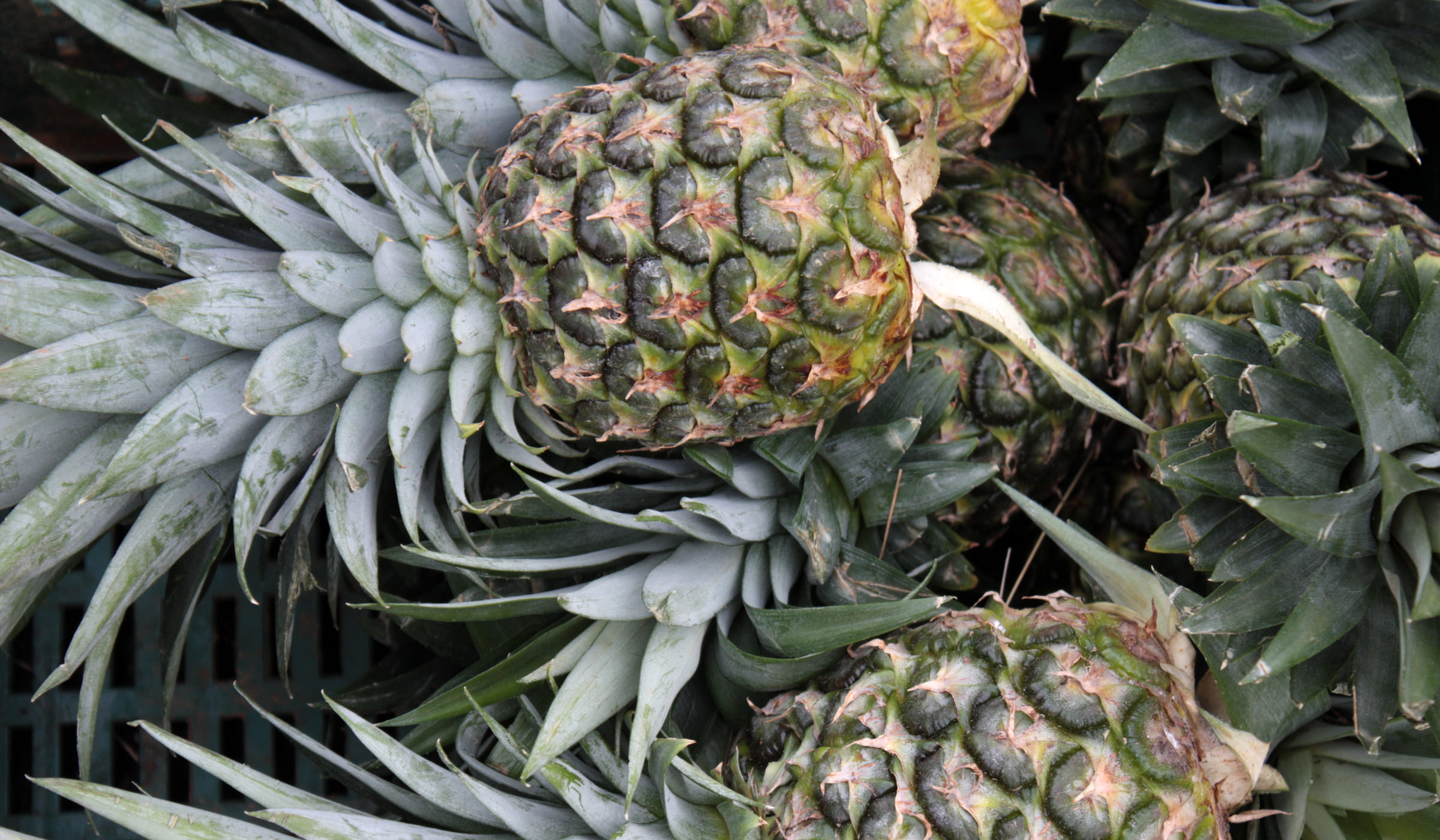
- “Cayenne” or “Smooth Cayenne” is large and often weighs more than 2 kilograms.
Its natural production cycle lasts 18 to 22 months, but in industrial plantations it can be reduced to 10 to 12 months. Typically, 60,000 plants are grown per hectare, with each plant producing only one fruit. In Martinique, nearly 700 hectares are dedicated to pineapple cultivation, with the largest farms located in the northern Atlantic municipalities (Ajoupa-Bouillon, Basse-Pointe, Lorrain, and Morne-Rouge).
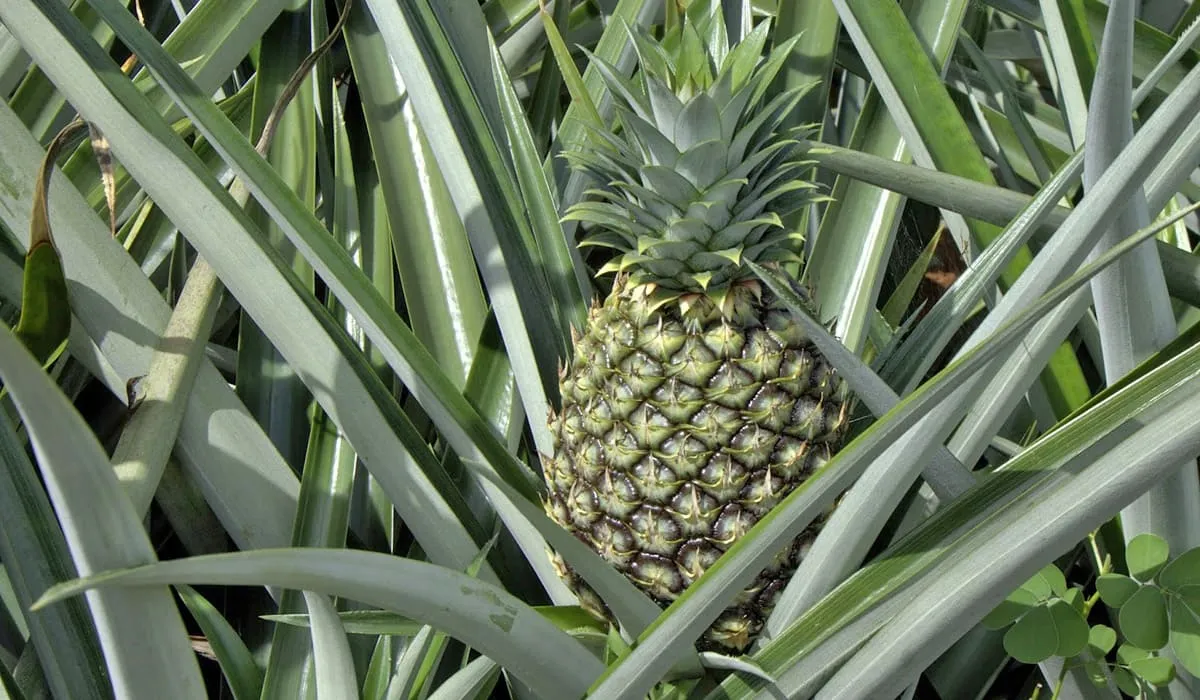
The pineapple plant is an herbaceous species that can reach 1 to 1.5 meters in all directions, with long lanceolate leaves measuring 50 cm to 1.80 m, usually toothed and sometimes smooth.
It cannot tolerate temperatures below 10°C. It is an exclusively tropical plant that requires well-drained, rich, and acidic soil.
It is strongly discouraged to store pineapple in the refrigerator.
Medicinal properties
Pineapple is believed to be diuretic and detoxifying. Thanks to bromelain, it helps digest proteins and is an excellent deworming agent. Pineapple is also a source of manganese and vitamin C.
It can help relieve osteoarthritis pain and treat colds. Some of its enzymes may also accelerate the healing of wounds and burns.
Uses
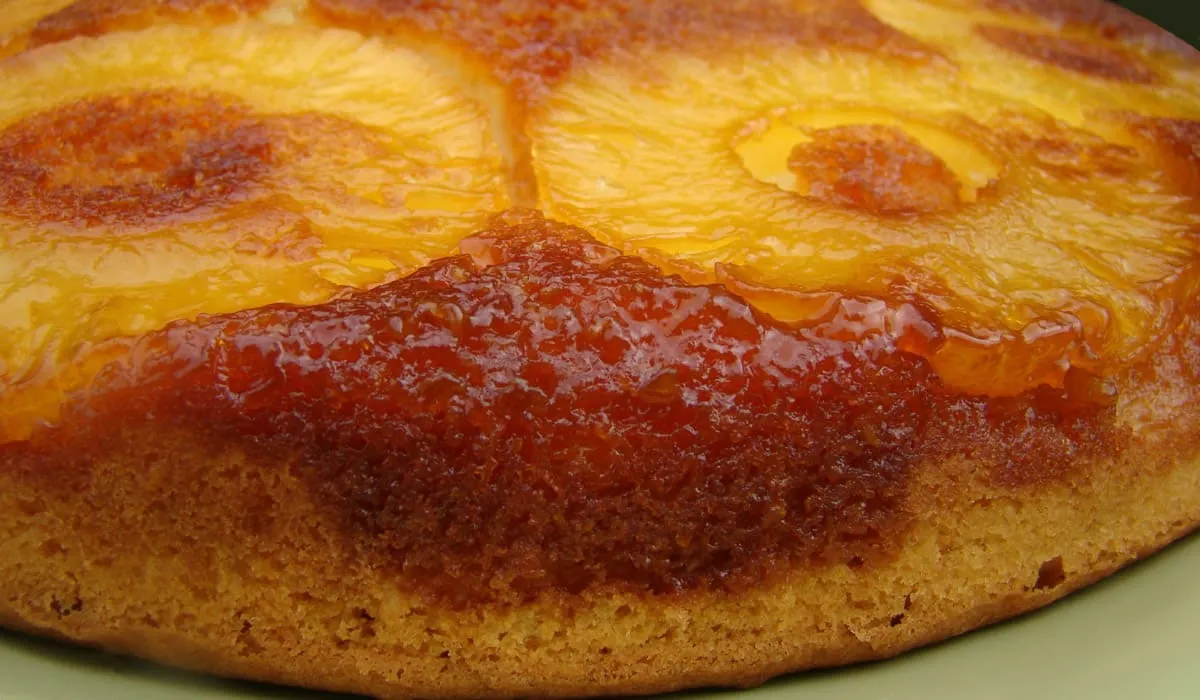
In Martinique, pineapple is widely used in everyday cuisine. It is often incorporated into sweet-and-sour sauces, eaten raw as a dessert, or used to make juices, cakes, sorbets, jams, fritters, and more.